What Is a Counter-Attack in Football? Meaning, Tactics and Examples
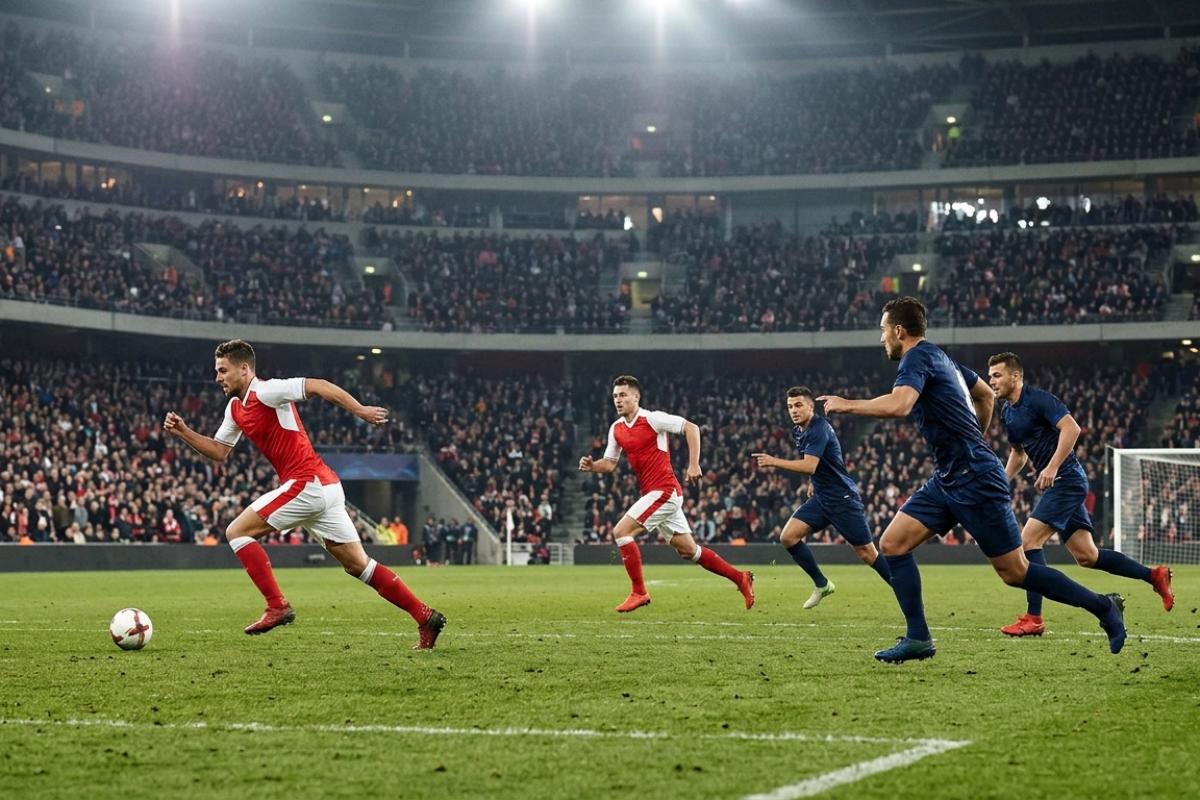
There’s a split second in football when the entire stadium holds its breath. Everyone both in the stadium and those watching on TV are all standing anticipating what’s about to unfold. A corner kick gets cleared, the ball drops to a midfielder, and suddenly three players are sprinting in the opposite direction with nothing but green grass in front of them. The home crowd that was roaring a second ago have suddenly gone quite with their hands on their heads. Everyone in the stadium knows exactly what's coming.
That's a counter-attack in football. It's football’s best magic trick: the defence turns into an attack before the other team has finished celebrating how much of the ball they've had.
I've spent years breaking down matches in studios and press boxes, and I'll tell you something. Ask a hundred fans what their favourite kind of goal is, and a huge chunk will describe a counter. Not a 47-pass tiki-taka masterpiece. A counter. Fast, a little bit dirty, and over in about eight seconds.
In this guide I'll walk you through what a counter-attack actually is, how teams build one, who does it best, how to stop it, and what it means if you're analysing games or having a punt on the next goal. No jargon. Well, barely any.
What Is a Counter-Attack in Football?
A counter-attack is a quick attack launched immediately after your team wins the ball back from the opposition. The key idea behind counter-attack is speed. You win possession and while the other team is still stretched out, still thinking about attacking and not yet back in a proper defensive shape. Then you hit them fast before they can organise themselves.
You can liken it to what happens in boxing, a boxer who lets the other guy swing and miss. The miss isn't the story, but the counter-punch that follows is what everyone will be talking about.
Here's a clear picture of what needs to happen for a successful counter-attack to take place:
- Your team wins the ball (a tackle, an interception, a loose pass, a saved shot).
- The opposition has players committed forward, so there's space behind them.
- Your team moves the ball forward quickly, usually within a few seconds and with very few passes.
- Someone attacks the space with a run, a dribble, or both.
Whenever you hear a commentator shout "they're on the break!" He’s simply referring to a counter-attack. Football loves having multiple names for everything.
Counter-Attack vs Fast Break vs Transition
These terms get thrown around like confetti, so let's tidy them up.
|
Term |
What it means |
How it's used |
|
Counter-attack |
A quick attack straight after winning the ball |
The standard term for the tactic |
|
Fast break |
Basically the same thing, borrowed from basketball |
Casual commentary and US coverage |
|
Transition |
The moment of switching from defence to attack (or the reverse) |
A bigger concept; counters happen inside it |
|
Breakaway |
A single player running clear toward goal |
Often the end of a counter |
|
Direct play |
Going forward quickly, often with long balls, without a turnover |
Not always a counter, because there may be no turnover |
That last one tends to confuse most football fans. A long ball from your own keeper isn't automatically a counter. For it to count as a counter-attack, you need that turnover first and space to run into.
How Does a Counter-Attack Work?
I like to think of a counter as a four-act play. It lasts just about ten seconds, but for it to successfully happen all four acts must be executed effectively.
Act 1: Win the ball
This is the foundation of the counter-attack process. Teams win the ball in lots of ways: a well-timed tackle, a cut-out pass, a goalkeeper catching a cross or a blocked shot. Where you win the ball it matters a lot. Win it deep in your own half and you've got a long way to run. Win it in the midfield and you're suddenly a threat to your opponent.
Act 2: The first pass
This is arguably the pass that ultimately decides whether a counter is won or lost. The best counter-attack teams look up and hit a forward pass immediately. Not a safe pass sideways. Not a back-pass to the centre-back for a breather. A pass that takes opponents out of the game.
One good first pass can bypass five players and that's the whole secret behind counter-attacks.
Act 3: Attack the space
The forwards and wingers need to sprint and most importantly, they need to do it before the pass arrives, not after. Football is a game of timing and a runner who waits to be sure of the pass has already lost half a yard. Often the runs are diagonal, pulling a defender out of position and opening a lane for a team-mate.
Act 4: Finish it
All that speed is wasted if the final ball or shot is poor. The final decision at the end of the counter is usually the hardest: shoot, square it or carry on dribbling? The best counter-attackers are cool-headed in these moments. They slow their brains down while their legs go flat out.
The Main Types of Counter-Attacks
If you’ve been watching football you must have notice that not all counters begin and end the same way. Here's a rough guide to the ones you'll see on a typical match day.
|
Type |
What it looks like |
Best suited to |
|
Direct counter |
One or two long passes to a fast forward |
Teams with a quick striker or winger |
|
Combination counter |
Short, sharp passes between 3 or 4 players moving forward together |
Technical teams with good link-up play |
|
Dribble counter |
One player carries the ball at speed through the middle |
Teams with a powerful midfielder or winger |
|
Set-piece counter |
The ball is cleared from a corner or free kick and the team springs forward |
Teams that defend set pieces well |
|
Keeper-led counter |
The goalkeeper catches or saves, then throws or kicks quickly to a runner |
Teams with an accurate, alert keeper |
You'll often see a mix or combination of this different counter-attacks. A direct ball starts it, a quick one-two passes continues it and a striker finishes it. Football doesn't follow precision or neat categories and that’s the beauty of the game.
Why Do Teams Use the Counter-Attack?
I get this question a lot, usually from someone whose team has just lost 1-0 to a side that had just 22% possession of the ball through the entire match. "How is that fair?" It's fair because football isn't scored on possession. Nobody hands out three points for having 78% of the ball.
Teams counter-attack for a few good reasons:
- Space is easier to find. When the opposition attacks, they leave gaps behind. Defences that are set up and organised are tough to break down. Defences that are scrambling are not.
- It suits underdogs. If you're weaker than your opponent, trying to out-pass them can be suicidal. Letting them have the ball and hitting them on the break is a smart way to level things up.
- It's efficient. A good counter can create a clear chance in under ten seconds, with very few passes.
- It uses your players' strengths. If you've got a rocket-fast winger, why on earth would you have him pass sideways for 90 minutes?
- It's brilliant against high defensive lines. The more a team pushes up, the more room there is behind them.
Mind you, counter-attack is not just for the "little" teams. Some of the biggest clubs in the world use counters as a weapon when the situation demands for it.
What Makes a Good Counter-Attacking Team?
You can't just tell eleven players to "go fast" and hope for the best. Here's what the good counter-attacking sides tend to have.
- A compact defence. Stay tight and narrow without the ball, then you have more chances to win it back in dangerous areas.
- A smart ball-winner in midfield. Someone who reads the game and wins tackles and interceptions. (Think of a player who seems to be everywhere at once.)
- Quick forwards or wingers. Pace is the headline, but it's also about when they start running.
- A good passer. Someone who can hit a 40-yard pass onto a runner's stride without needing a second touch.
- Discipline. Not every team member should abandon their position the second the ball turns over. Someone has to stay back in case it goes wrong.
- Fitness. Sprinting repeatedly for 90 minutes isn't for the faint-hearted.
I'd also add one thing that doesn't show up in the stats: patience. It sounds silly, but a team that's happy to defend for long spells without panicking is the one that gets the chance to counter. That’s mostly because frustrated teams push forward too early and lose their edge.
Famous Counter-Attacking Examples in Football History
This is my favorite part of this article. I want to give you real examples because a concept like this is much easier to remember with a few pictures in your head.
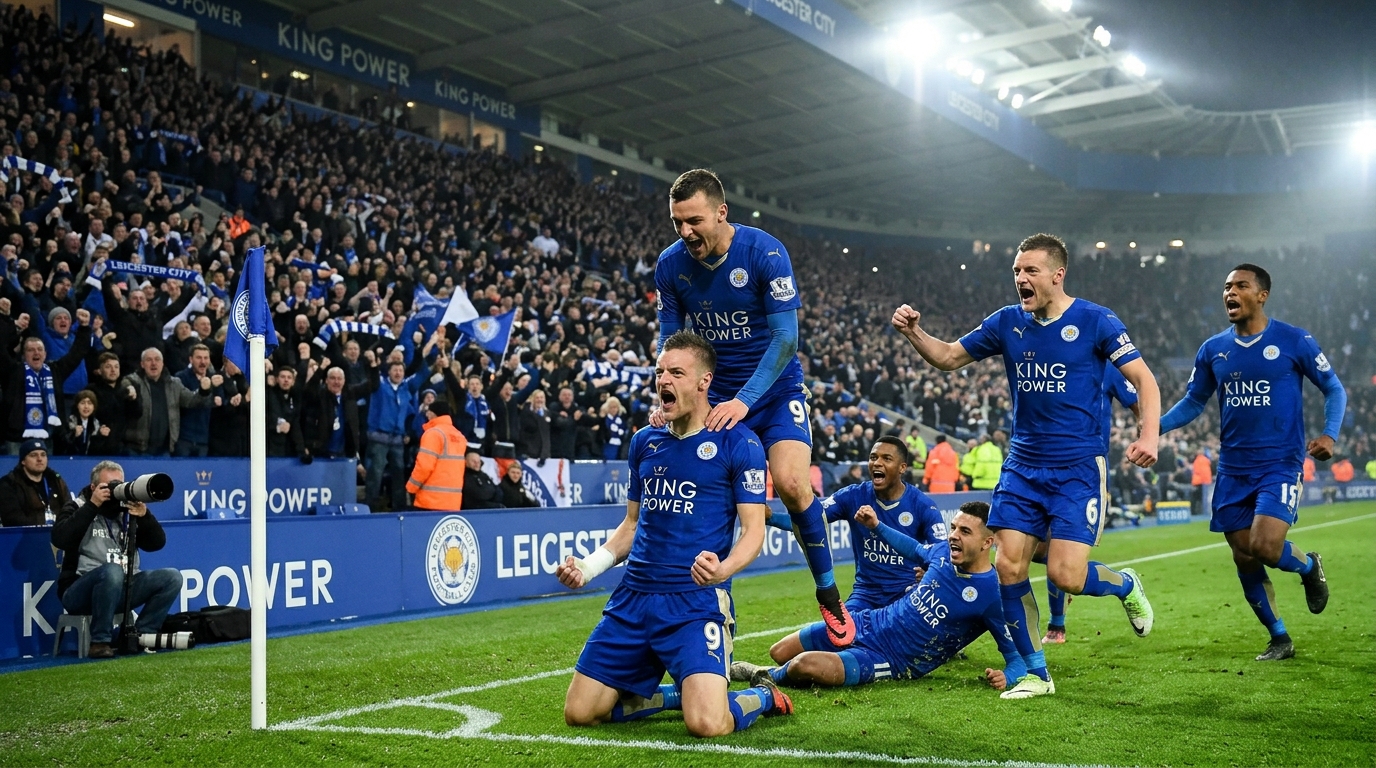
Leicester City, 2015-16
If you want the poster child for effective counter-attacking football, look no further. Leicester won the Premier League at odds that were laughed at before the season started. They didn't dominate the ball. They didn't need to. They sat in a tight shape, won it back through N'Golo Kanté's relentless work in the midfield, and sent the ball quickly towards Jamie Vardy, who scored 24 league goals that season, and Riyad Mahrez, who was sensational. It was a masterclass in doing the simple things at an unbelievable speed.
I remember watching a show around that time and one of the pundits kept on saying "this can't last". Every week Liecester kept proofing him wrong.
Inter Milan, 2010 Champions League
José Mourinho's Inter faced a brilliant Barcelona side in the semi-final and chose to defend deep, stay compact and strike on transitions. They went on to win the Champions League that year, beating Bayern Munich in the final. It's often held up as a case study in how a well-organised defence combined with quick breaks can beat the most possession-heavy team around.
Netherlands vs Spain, 2014 World Cup
Spain were the reigning world champions, remember. The Dutch beat them 5-1 in the group stage with direct, fast attacks, and Robin van Persie's flying header and Arjen Robben's pace were the stars. Spain's passing game was lovely, but it left space behind, and the Dutch ran straight through it.
Liverpool under Jürgen Klopp
Klopp's teams are brilliant at what many call the counter-press (or gegenpressing), which I'll explain in a second. The idea is to win the ball straight back, high up the pitch, and attack while the opposition is still disorganised. With players like Mohamed Salah, Sadio Mané and Roberto Firmino, the attack could go from a lost ball to a goal in a heartbeat.
Real Madrid in big European nights
If you want to see counters used with pure class, watch Real Madrid on a European night. They'll let you have the ball for twenty minutes, then in four passes they'll have scored. It's almost rude to say the least.
Counter-Attack vs Counter-Press (Gegenpressing)
People mix these up all the time, so let me make it simple.
|
Counter-attack |
Counter-press |
|
|
Where the ball is won |
Often in your own half or midfield |
High up the pitch, right after losing it |
|
Team shape |
Usually sits deeper and compact |
Stays close together to press instantly |
|
Main idea |
Absorb pressure, then strike into space |
Win it back within seconds, then attack |
|
Energy cost |
High sprints, but with rests |
Constant intensity |
|
Famous examples |
Leicester 2015-16, Mourinho's Inter |
Klopp's Liverpool and Dortmund |
They aren't enemies. Plenty of teams do both. Think of the counter-attack as a patient hunter and the counter-press as a pack of wolves. Same goal, different method.
Common Formations and Tactics for Counter-Attacking
There's no magic formation, but some shapes make counters easier.
- 4-4-2 (flat or diamond): Two strikers give you outlets, and the two banks of four are tough to break down.
- 4-2-3-1: Two holding midfielders protect the back, while the wide players and the number 10 break forward.
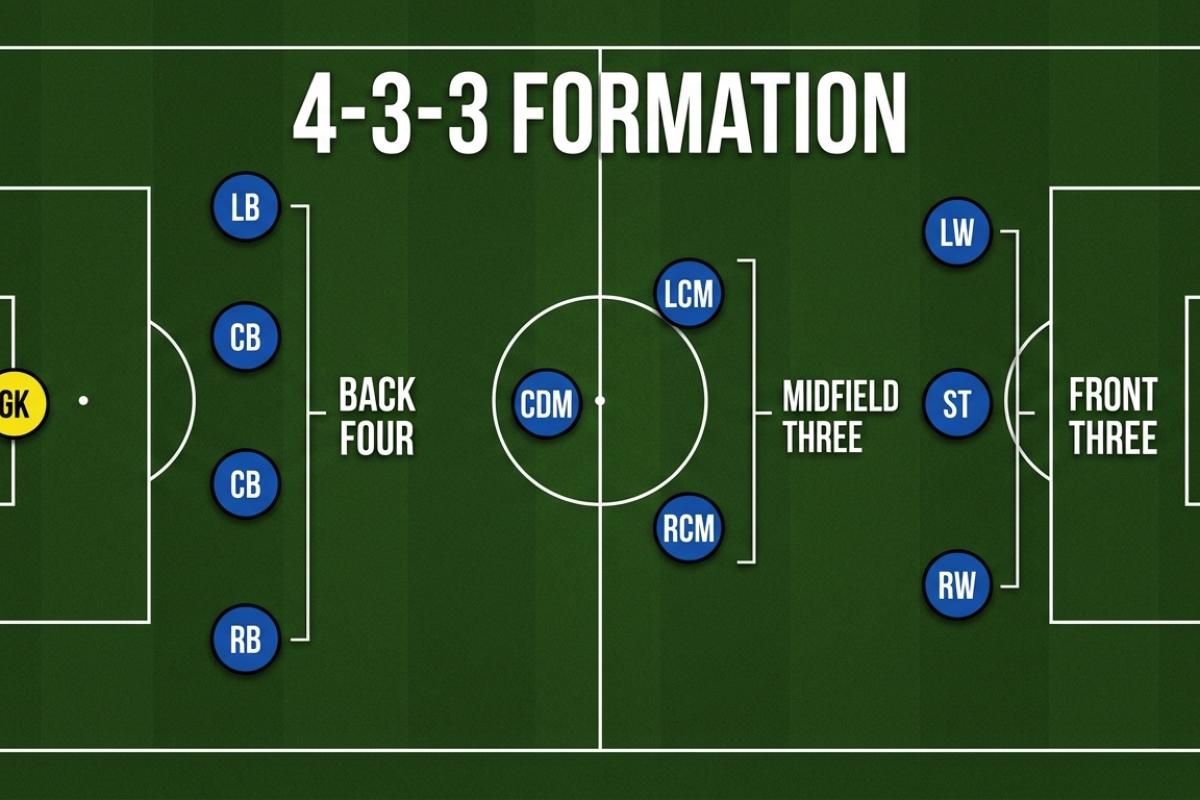
- 4-3-3: Wide forwards stretch the pitch and run in behind, with a midfield trio to win the ball and spring forward.
- 5-3-2 or 3-5-2: Deep and solid at the back, with wing-backs who can gallop forward on the break.
- 4-5-1 (or 4-1-4-1): A congested midfield that's hard to pass through, with a lone striker to hold up or run in behind.
Rather than getting hung up on numbers, here are the tactical habits that really matter:
- Defend narrow. Make the pitch small and force the opposition wide.
- Pick your pressing moments. Don't chase everything. Pounce on a poor touch or a slow back-pass.
- Have a designated outlet. Know who's getting the first pass. A target man or a quick winger works well.
- Run in channels. Forwards should make runs between defenders, not directly at them.
- Support the runner. Midfielders need to arrive in support, or the break fizzles out.
- Keep a safety net. At least two players should stay home to protect against a counter from the other side.
How to Defend Against a Counter-Attack
Now let's flip it. If you're the team with the ball, how do you avoid getting caught out? This part matters to analysts and bettors alike, because it tells you where a match might turn.
- Rest defence. Keep a few players behind the ball even while attacking, so if you lose it you've got cover. Coaches call this "rest defence" or "defending in attack".
- Counter-press immediately. Squeeze the player who just won the ball before he can look up. Three seconds is the magic number most coaches talk about.
- Tactical fouls. Sometimes you take a yellow card on purpose to stop a break. It isn't pretty, but it's smart.
- Don't over-commit full-backs. If both full-backs push up at the same time, the space behind them becomes a motorway.
- Watch the ball, but also the runners. Defenders who ball-watch get beaten for pace.
- Drop off when needed. Sometimes the best option is to retreat and defend the space rather than chase the ball.
Here's a little trick I use when watching games: look at the distance between the last defender and the halfway line when a team loses the ball. If it's huge, a counter is a real danger.
Strengths and Weaknesses of the Counter-Attack
|
Strengths |
Weaknesses |
|
Creates high-quality chances quickly |
Can lead to long periods of defending |
|
Suits teams with pacey attackers |
Harder to unlock teams that sit deep |
|
Works well against high defensive lines |
Requires great discipline and fitness |
|
Great for underdogs and away games |
Risky if the first pass goes wrong |
|
Exciting for fans to watch |
Can be seen as "negative" by critics |
That last point is worth a quick rant. People sometimes call counter-attacking football "anti-football". Nonsense. Winning the ball, spotting the space and executing a perfect break at full speed takes enormous skill. It's just a different kind of beauty.
Frequently Asked Questions About Counter-Attacks in Football
What does counter-attack mean in football?
It means launching a fast attack right after winning the ball from the opposition, while their defence is out of shape. The idea is to use the space left behind when they went forward.
Is a counter-attack a good tactic?
Yes, when it fits your players. It's brilliant for teams with pace and a solid defence, and it's a favourite of underdogs. It's less effective if your squad lacks quick attackers or good passers.
What's the difference between a counter-attack and a fast break?
Nothing meaningful. "Fast break" is simply another term, borrowed from basketball, for the same idea.
What is a counter-attacking team?
A team that's comfortable without the ball, defends compactly, and relies on quick transitions to create chances. They're happy to let the opponent have possession.
Which formation is best for counter-attacking?
There's no single best one. Many teams use a 4-4-2, 4-2-3-1 or 5-3-2 because they're compact at the back and have quick players up front. The players matter more than the numbers.
How do you stop a counter-attack?
Keep defenders back while you attack (rest defence), press the ball quickly after losing it, and don't let your full-backs both push up together. Sometimes a tactical foul is the smartest move.
Who are the best counter-attacking players?
In general, they're fast forwards and wingers with great timing, plus midfielders who can win the ball and pass forward. Think of players like Vardy at his peak, Kylian Mbappé, or Vinícius Júnior, all of whom thrive in open space.
Is counter-attacking football boring?
I'd say the opposite. Counters are some of the most thrilling moments in football. Chaos, speed and a big payoff.
Final Thoughts
So, what is a counter-attack in football? It's the art of turning a defender's moment into an attacker's opportunity, in seconds. It rewards smart defending, sharp thinking and fearless sprinting. It gives underdogs a fair fight and gives fans a reason to jump out of their seats.
Whether you're analysing a match, writing your own tactics board, or just trying to explain to your mate why his possession-heavy team lost again, understanding the counter gives you a sharper eye. Next time you're watching, look for that moment: a won tackle, a quick look up, a ball into space. That's where the game often changes.
Now I want to hear from you. What's the best counter-attack goal you've ever seen? Drop it in the comments, share this article with the friend who still thinks possession is everything, and keep an eye out for more tactical breakdowns coming soon.
Albert Akpama (Albertflex) is a tech guru, football enthusiast and sports writer that’s passionate about making football predictions easier to understand. He focuses on match analysis, prediction strategies, bookmaker reviews and betting insights, helping readers understand the key factors that influence football match results. At 1Banter, Albert combines his passion for football with a practical, evidence-based approach to analysing matches.
All author postsRelated posts
-
How to Become a Professional Footballer: A Step-by-Step Guide
Want to become a professional footballer? Learn the key steps,...
-
How to Beat a 4-3-3 Formation: 5 Tactical Strategies That Work
How to beat a 4-3-3 formation? Five proven tactical strategies...
-
What Is a Brace and Hat-Trick in Football? Key Differences Explained
Brace and hat-trick in football explained: what each term mean...

0 Comments
- No comments yet. Be the first to share your thoughts.
Login to post a comment.